1 / 8
Rare Vintage Citizen Vega Alarm Chronograph Digital Watch 9248-390067 JDM 1980s
► BUY DIRECT & SAVE 10% — SAME WATCH, NO MARKETPLACE FEES
► SECURE STRIPE CHECKOUT
► FREE US SHIPPING — $30 FLAT INTERNATIONAL
► FREE US SHIPPING — $30 FLAT INTERNATIONAL
MODEL:
Citizen Vega
Citizen Vega
MOVEMENT:
Quartz
Quartz
YEAR:
1980-1989
1980-1989
CASE MATERIAL:
Stainless Steel
Stainless Steel
BAND MATERIAL:
Stainless Steel
Stainless Steel
► SELLER'S DESCRIPTION
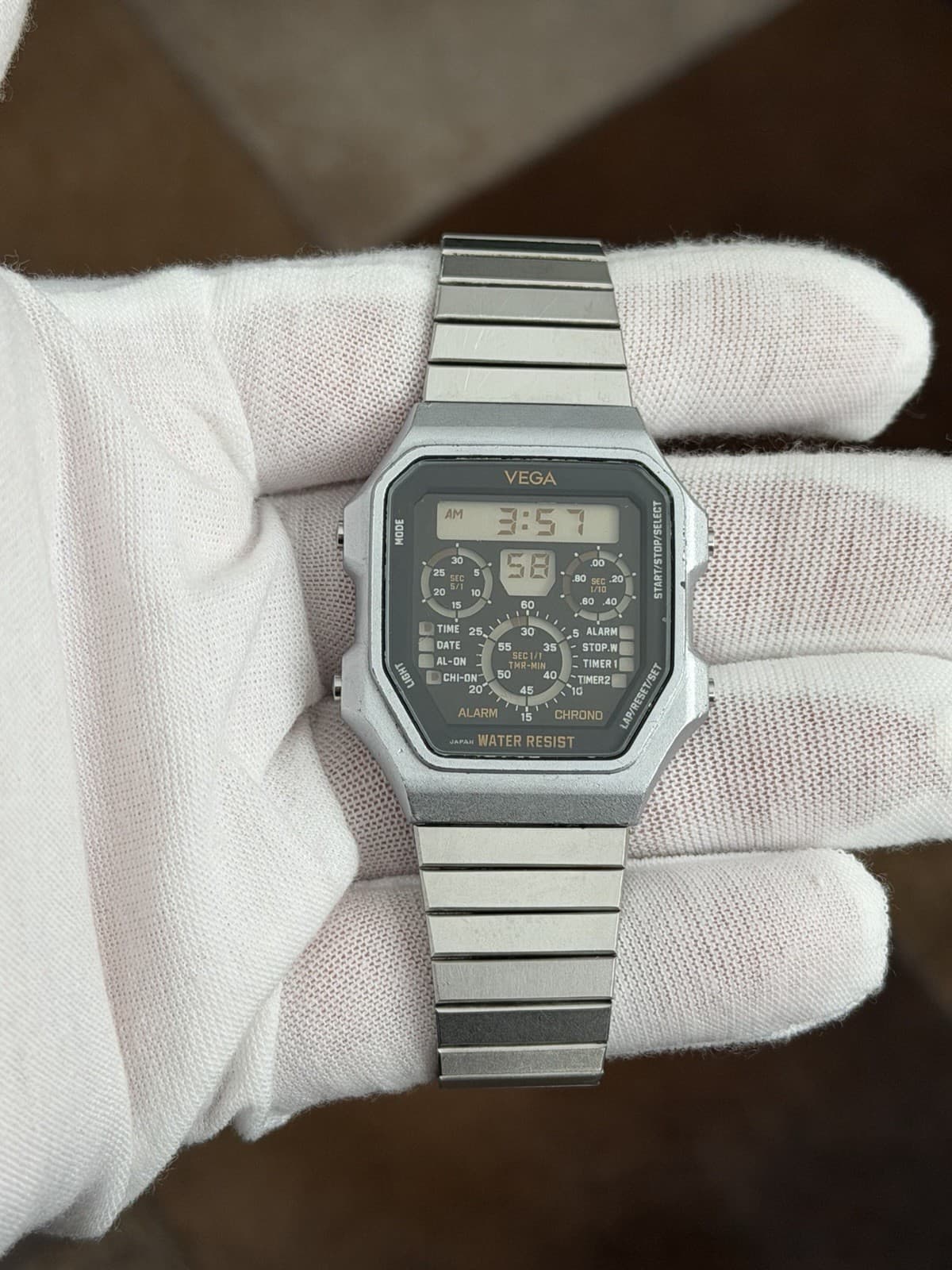
Up for sale is a rare vintage Citizen Vega Alarm Chronograph men’s digital sports watch, reference 9248-390067, produced for the Japan Domestic Market (JDM) during the 1980s. This model features a stainless steel case, a classic Vega digital display layout, and the functional, sporty styling that defines Citizen’s quartz designs from this era.
The sound on the watch is not working, meaning the alarm and other audible functions do not produce sound. Aside from this issue, the watch is in working condition. Timekeeping, display, chronograph, calendar, and all button functions operate properly.
All parts of the watch are original, including the case, module, display, pushers, and original stainless steel bracelet.
The watch shows signs of use and age consistent with a vintage piece. The photos best describe its physical condition.
Key Details
• Brand: Citizen
• Line: Vega
• Model: Alarm Chronograph
• Reference: 9248-390067
• Era: 1980s
• Market: Japan Domestic Market (JDM)
• Movement: Quartz digital
• Bracelet: Original stainless steel bracelet
• Working Status: Sound not functioning; all other functions working
• Condition: Shows signs of use and age — photos best describe condition
A hard-to-find Vega digital chronograph that represents Citizen’s practical and performance-driven digital designs of the 1980s and remains a desirable piece for vintage digital watch collectors.
Ships carefully. Feel free to message me with any questions.
ADDITIONAL SPECIFICATIONS
Bezel Color:Silver
With Papers:No
Vintage:Yes
Band/Strap:Bracelet
Reference Number:9248-390067
Case Color:Silver
Department:Men
Type:Wristwatch
Band Color:Silver
Style:Casual, Sport
With Original Box/Packaging:No
Features:Alarm, Backlight, Chronograph
Country of Origin:Japan
Display:Digital
► ARCHIVE FILE: VEGA — BRAND HISTORY
Vega was Citizen's affordable, design-led quartz label, giving the company room to explore digital displays, unconventional formats, and accessible analog watches during the 1980s.
Read the full Vega story — and shop all Vega watches ►► RELATED TIMEPIECES DETECTED (4)
RECOMMENDATIONS BASED ON BRAND AND MOVEMENT ANALYSIS