Vintage Vega Watches
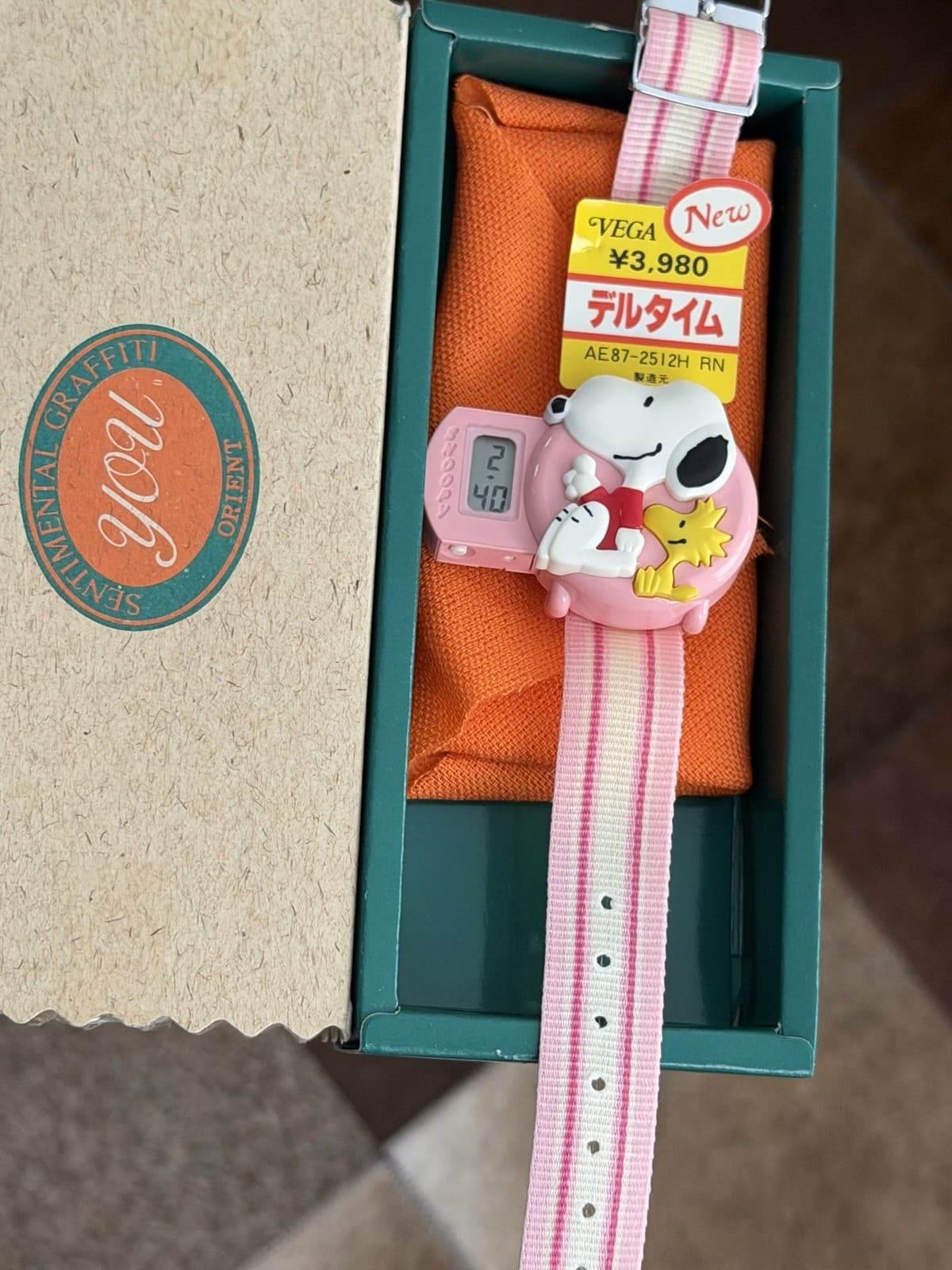
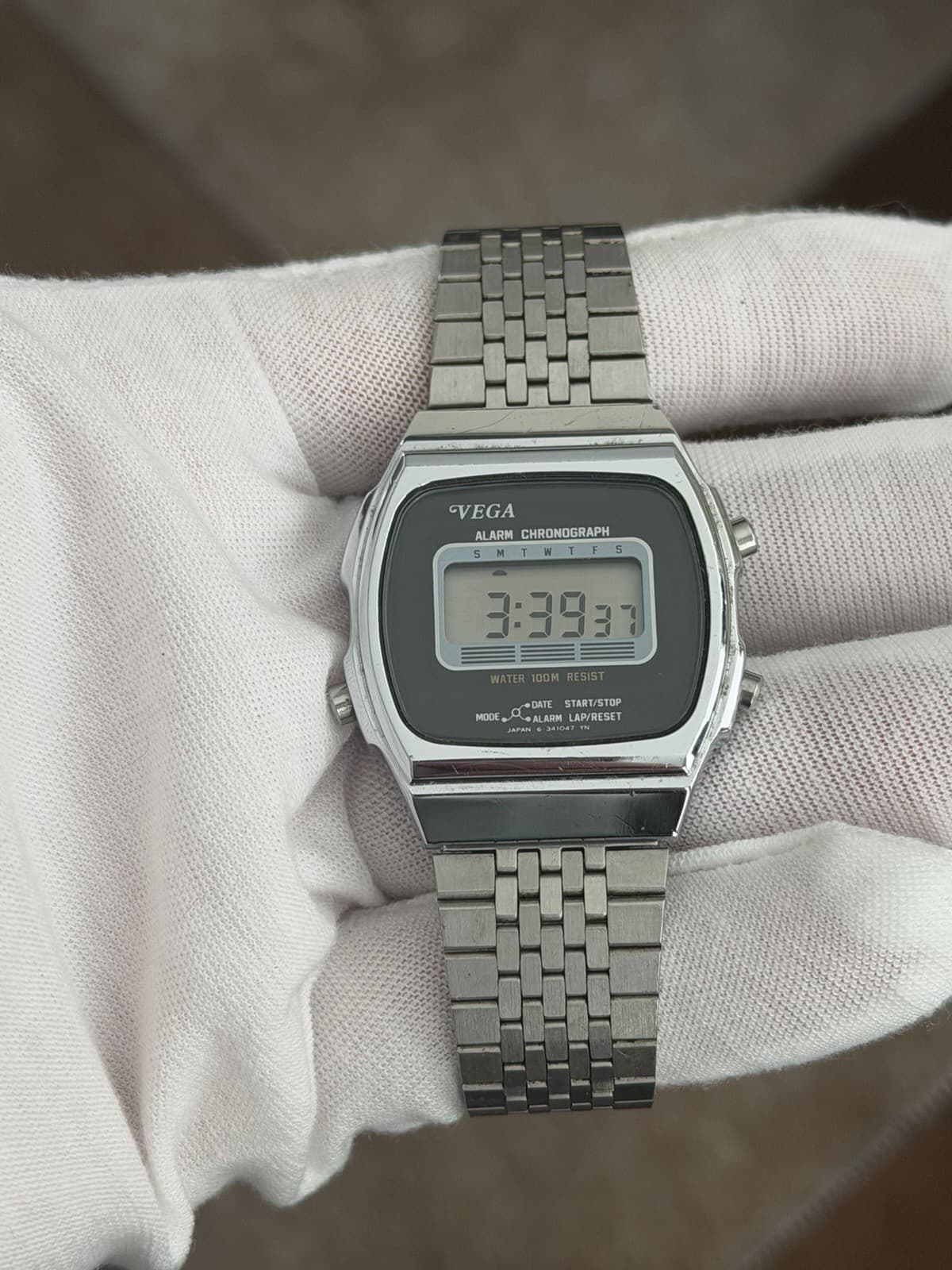
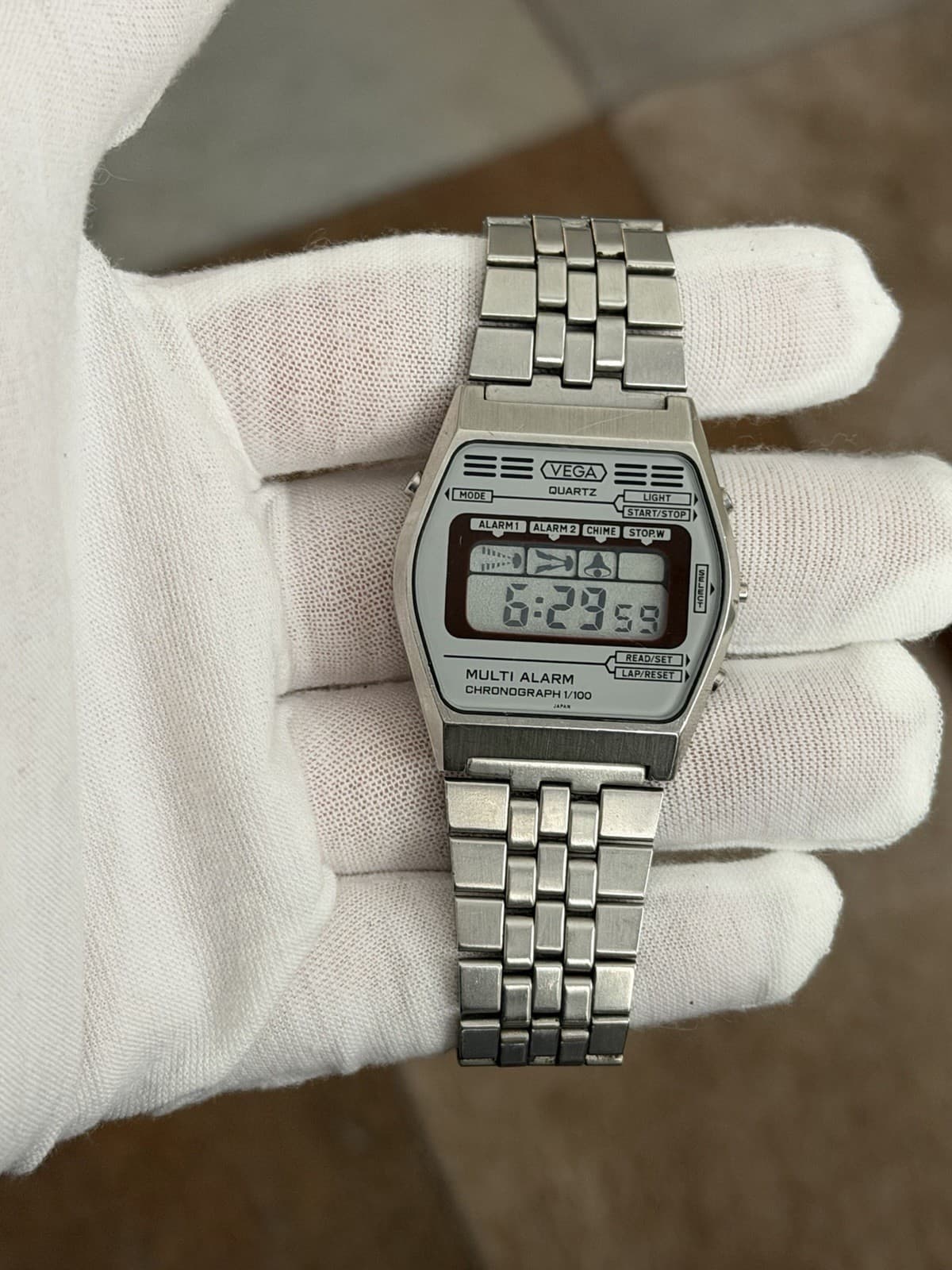
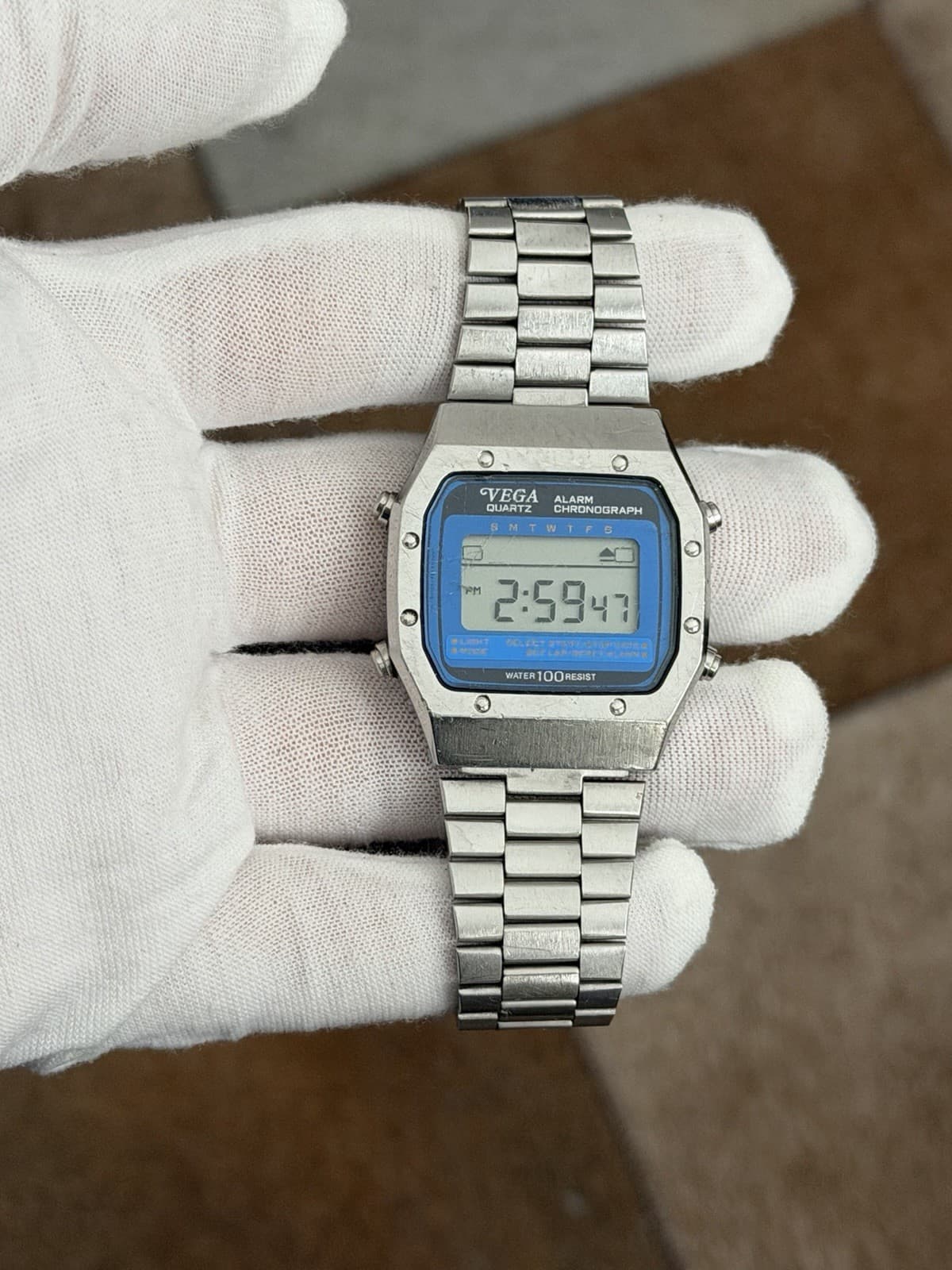
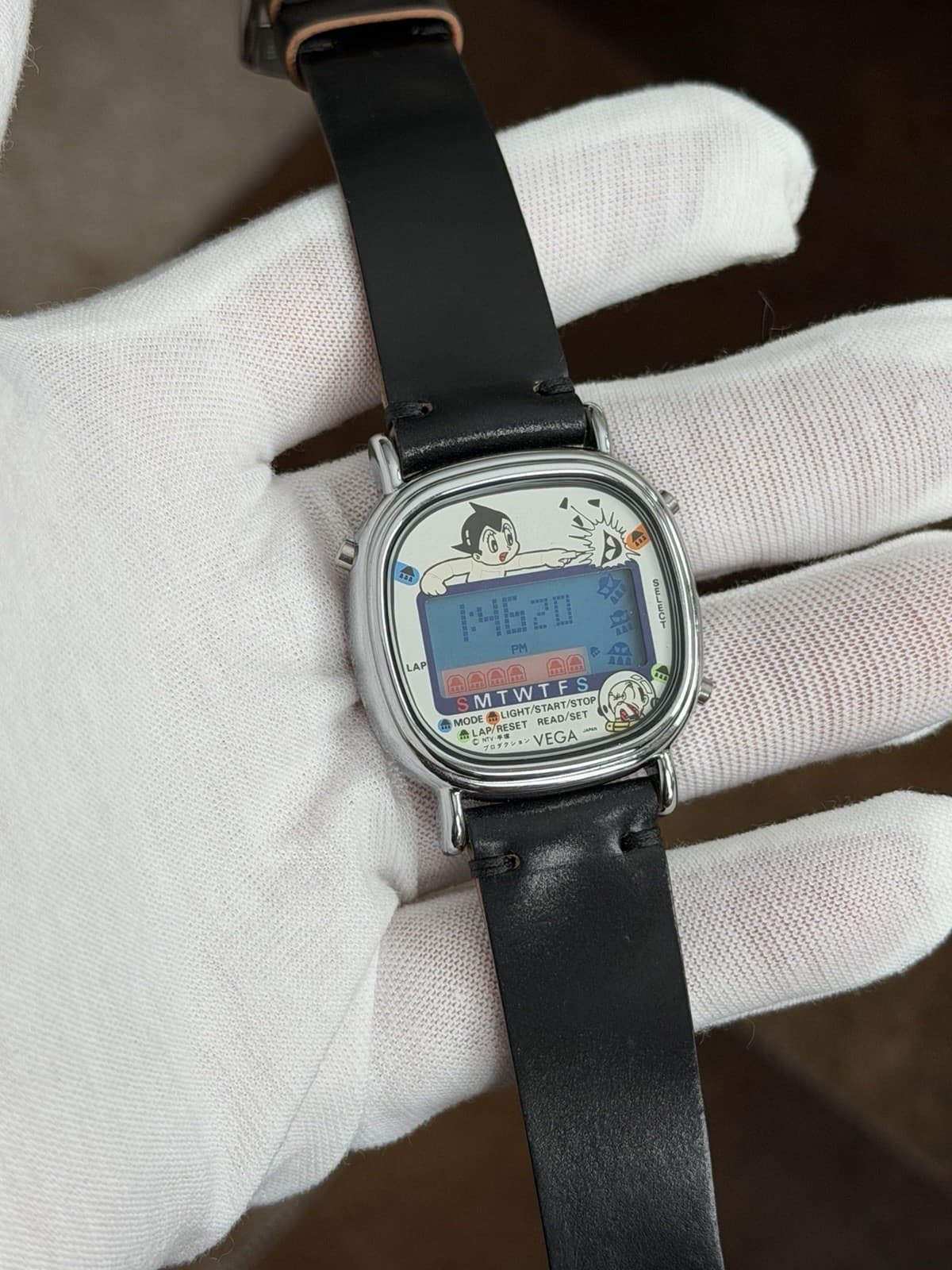
Vintage Vega captures the accessible, design-driven side of Citizen's 1980s catalog. Created for lower-priced quartz watches, the label ranged from playful LCD concepts and multifunction digitals to slim analog and sports designs, all built with Citizen technology. Every listing shows the exact watch offered, with new Japanese finds added as they surface.
Read the detailed Vega history13 Vega timepieces in stock
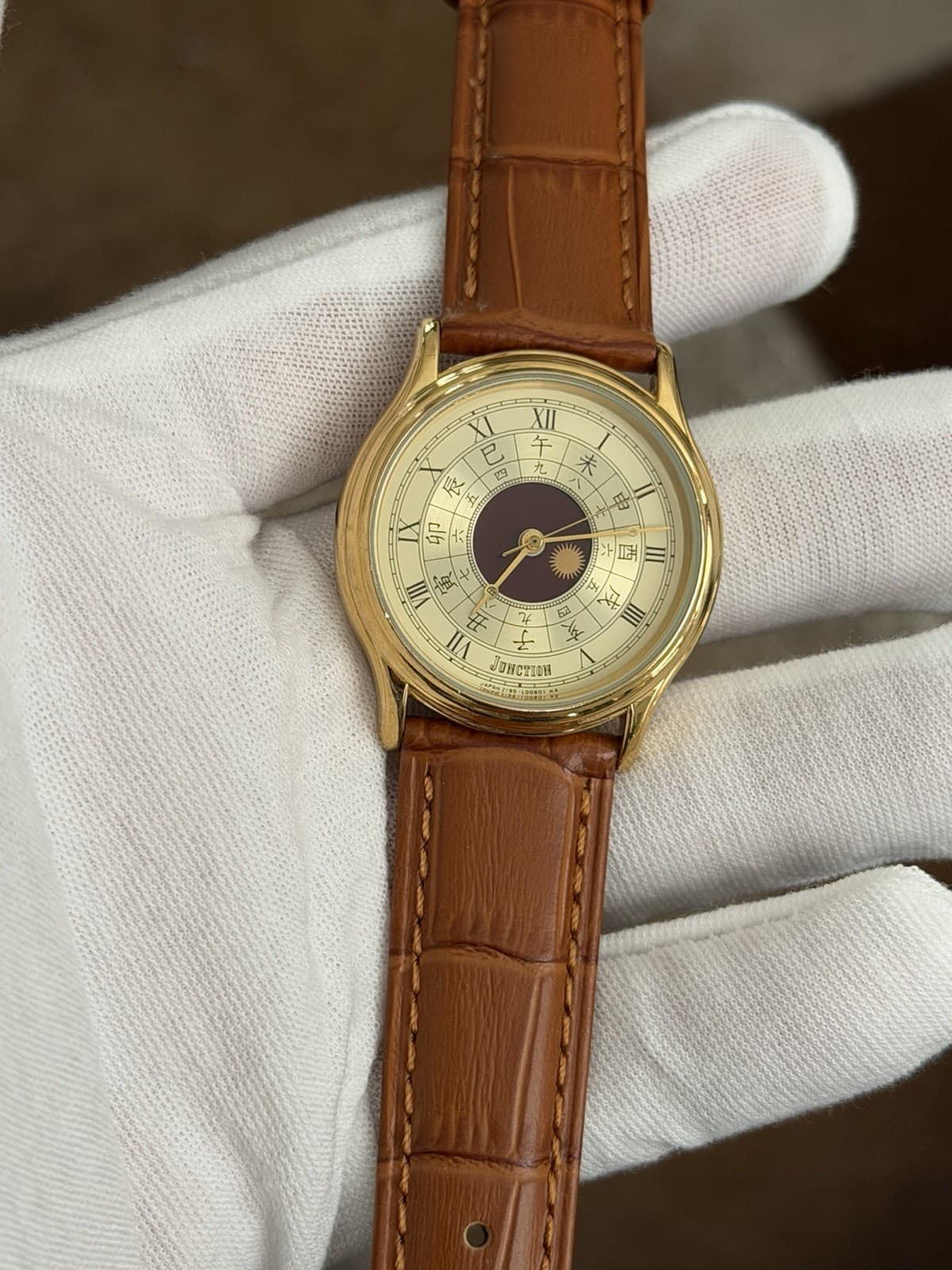
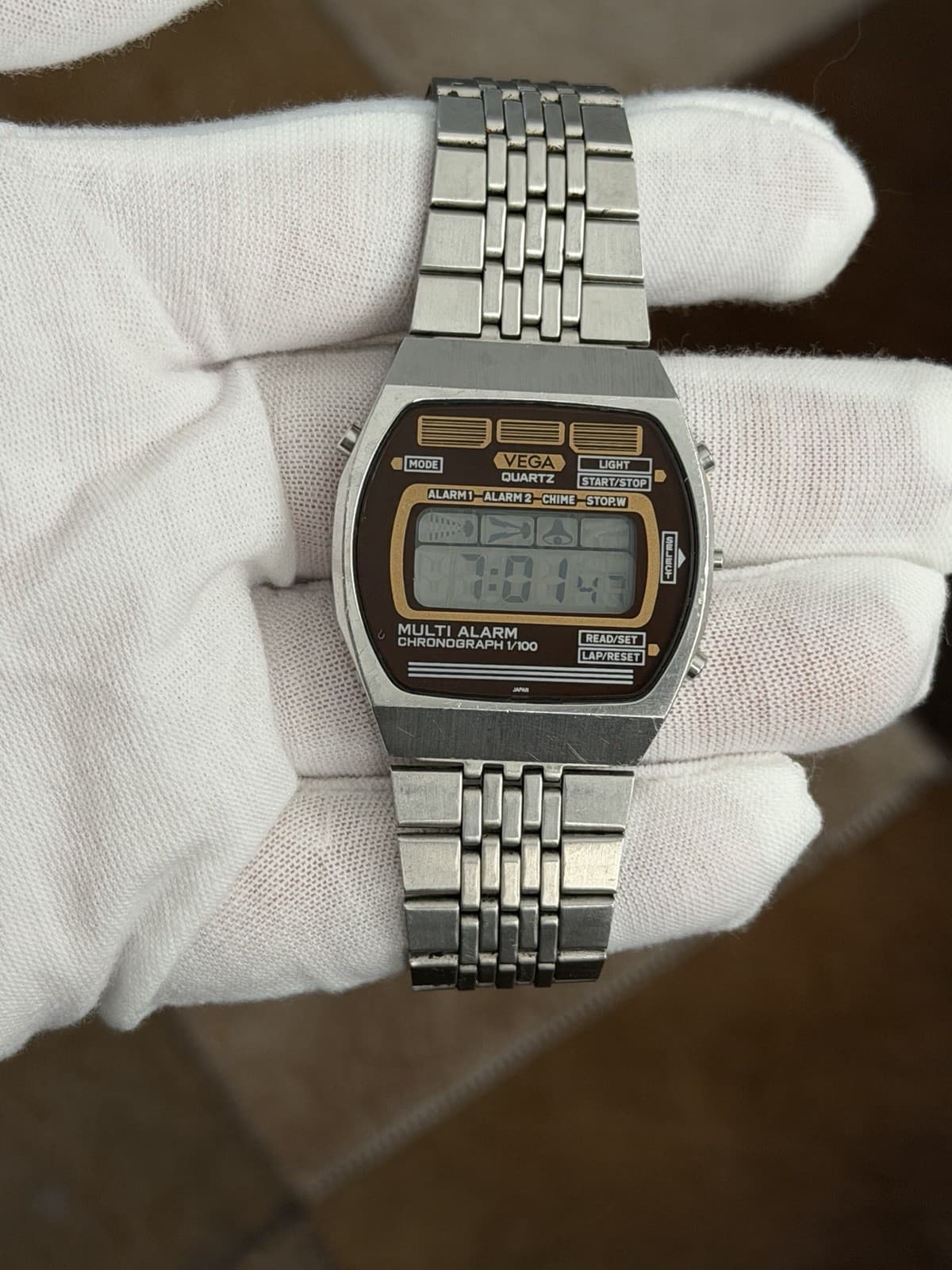
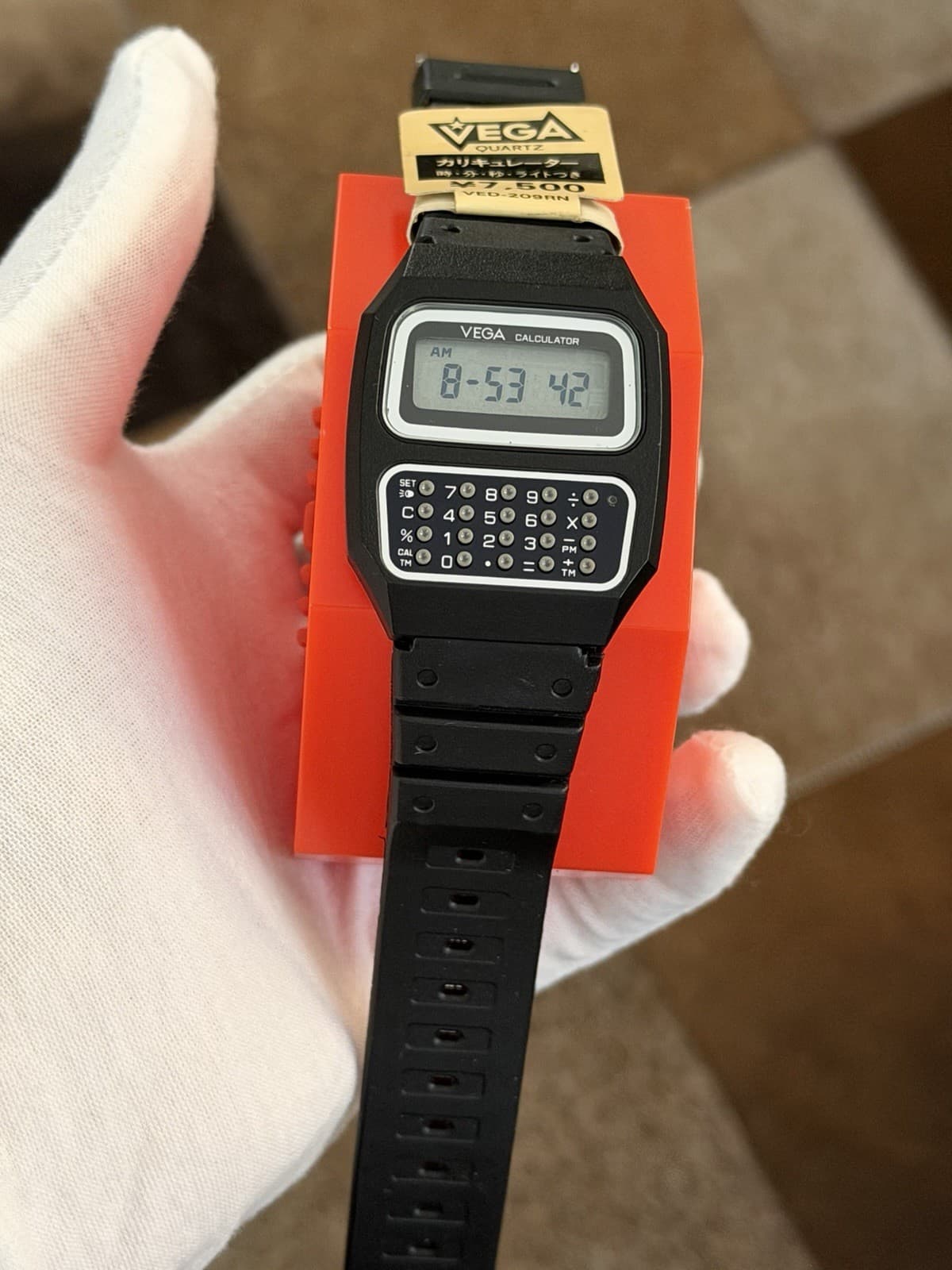
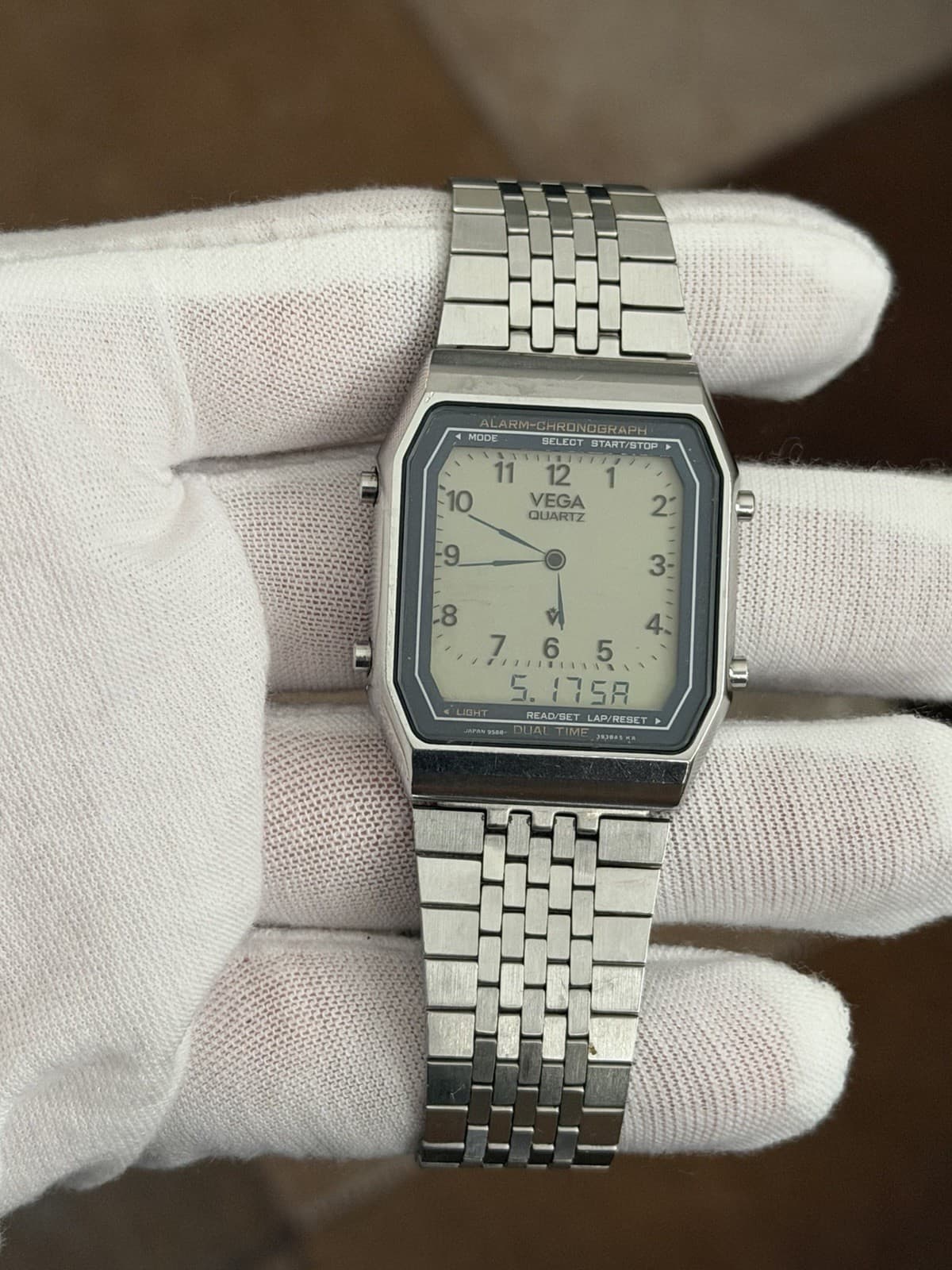
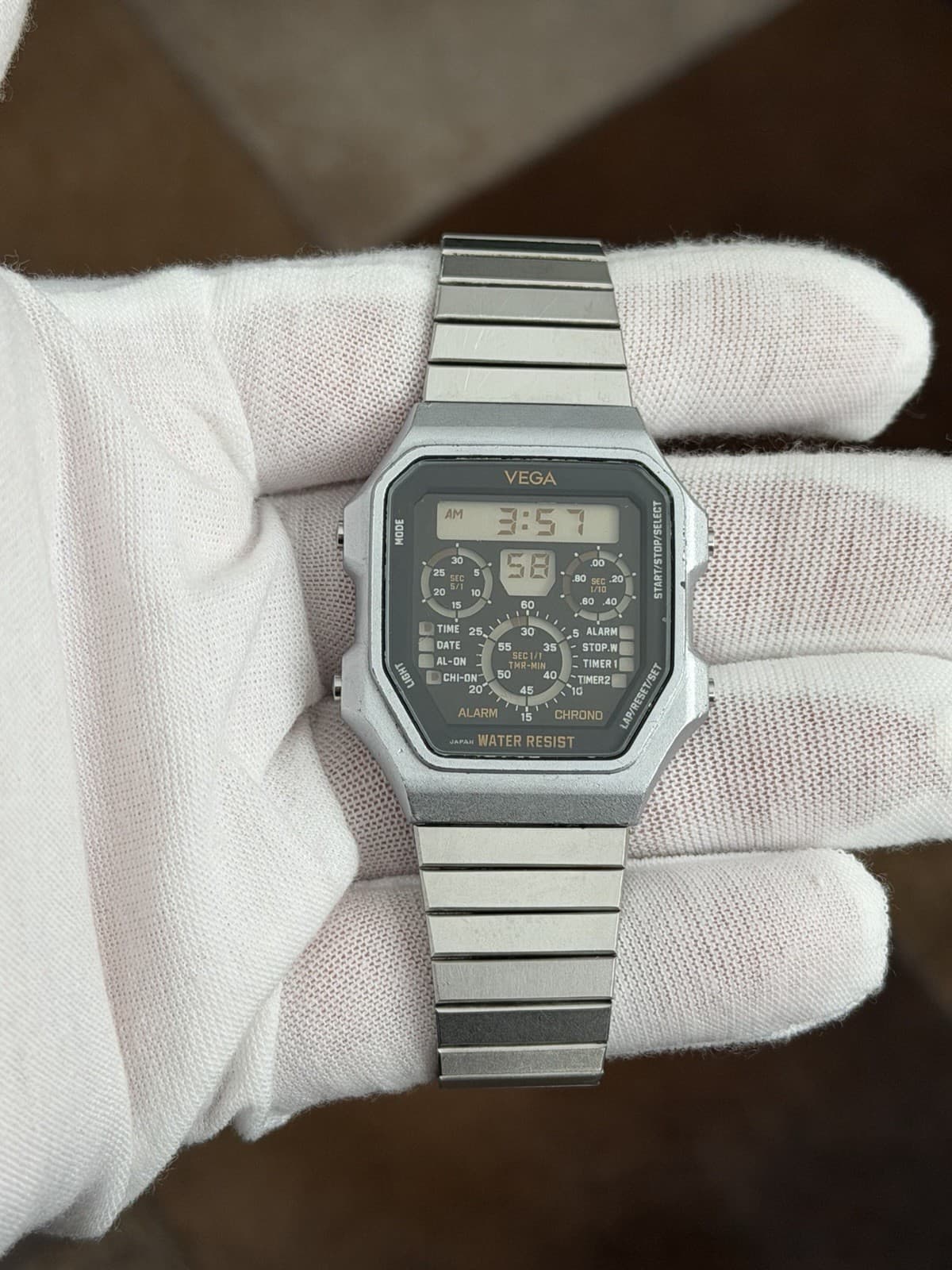
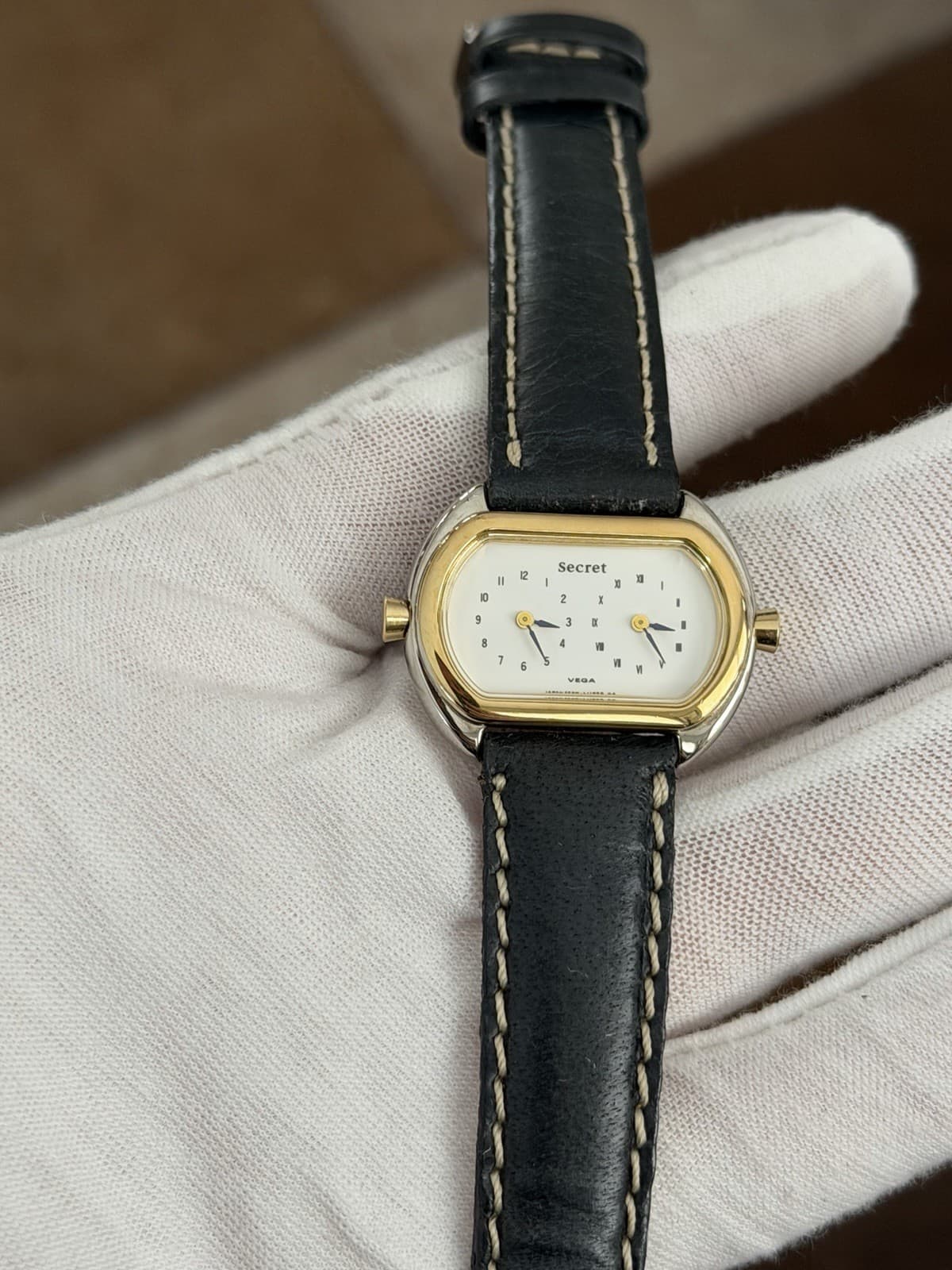
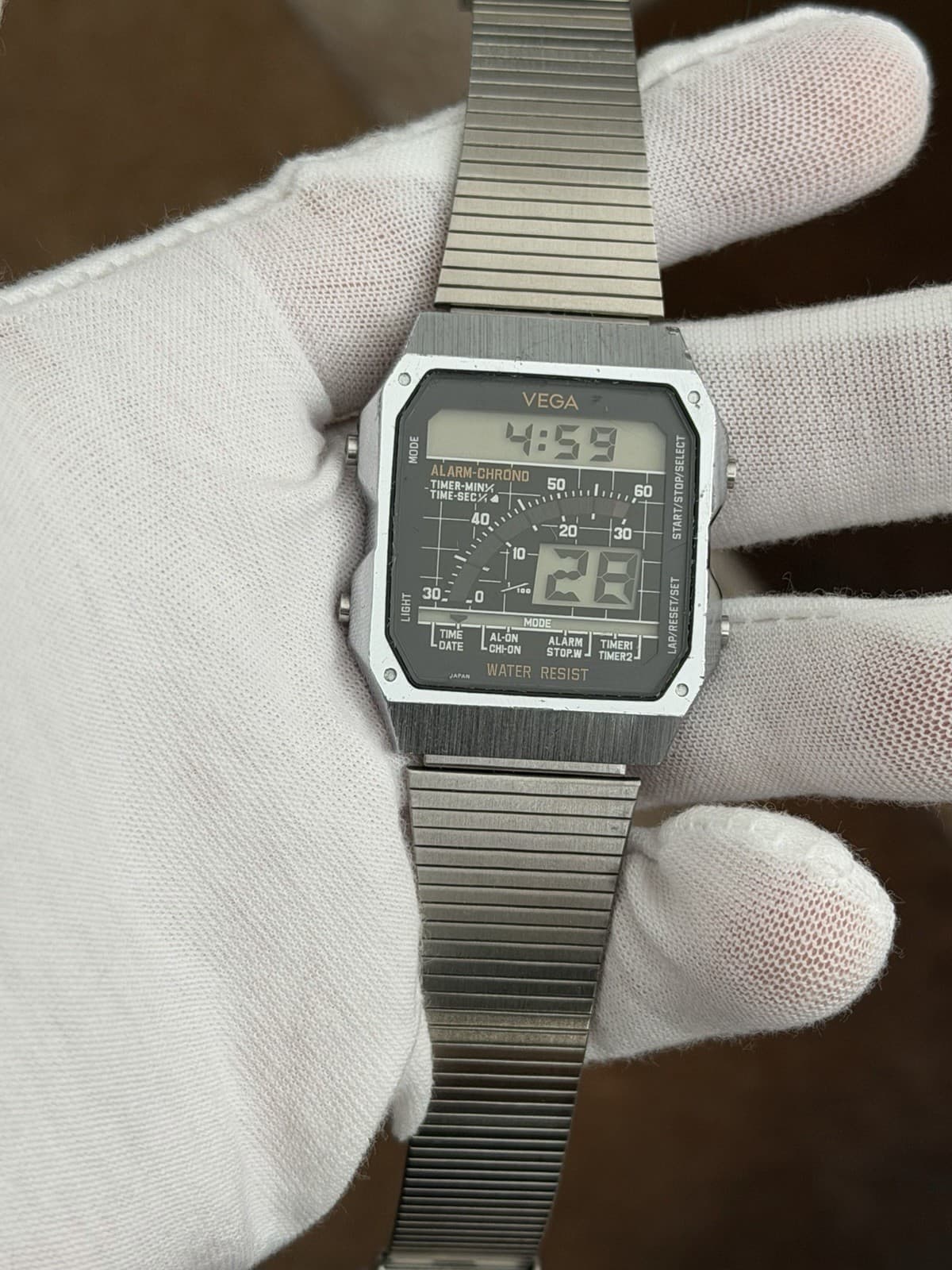
Compare Vega watches by model
The Vega Story
Vega appeared around 1979–80, after mass-produced digital watches had driven quartz prices sharply downward. Citizen created it as a separate label for affordable electronic watches rather than as an independent manufacturer; the movements, technology, and corporate ownership all came from Citizen. A United States trademark filing made that relationship explicit when Citizen Tokei applied to register the Vega name for watches and clocks in January 1980. The label let Citizen compete at lower price points without redefining the position of its main name.
The early watches were inexpensive, but they were not anonymous or technically generic. A documented 1980 dual-time model combined simulated analog hands and a numerical readout on one LCD, then added a second time zone, alarm, stopwatch, and light. Its Citizen-built electronics show how Vega repackaged the parent company's capabilities for a younger, more price-conscious market. From the beginning, the label was as much about making quartz feel playful as it was about making it affordable.
Citizen's 1982 releases made that purpose especially clear. The Vega Current displayed time one character at a time on a dot field and was sold not only as a wristwatch but also as a pendant and a ring. Later that year, the Radio Boy combined a digital watch with an AM receiver heard through a dedicated earphone. These products treated the watch as fashion, entertainment, and personal electronics at once—an approach that distinguished Vega from a conventional budget sub-brand.
Vega was broader than its novelty digitals. The name also appeared on straightforward analog quartz watches, combination displays, dress pieces, and sports-styled models, all drawing on Citizen movements and manufacturing. The 1987 Disc Time captured the same experimental spirit in analog form: rotating plastic discs replaced conventional hands inside a thin, lightweight integrated case and strap. Across the range, familiar quartz technology became a platform for changing how an inexpensive watch could look, feel, and display time.
By the later 1980s, Citizen was concentrating on stronger mid-market ranges and Vega gradually receded from view; no reliable record establishes a single formal discontinuation date. Its importance is not that it became a large standalone marque, but that Citizen used it as a flexible design laboratory during the most competitive years of the quartz boom. Vega connected low prices with unusually adventurous formats, leaving a compact but distinctive chapter in Citizen's history.