Vintage Illinois Watches
Vintage Illinois represents one of the high points of American watchmaking, spanning finely adjusted railroad watches, elegant pocket movements, and distinctive Art Deco wristwatches. Every example is individually photographed and sold exactly as shown, with inventory changing as pieces from the Springfield and Hamilton years surface.
Read the detailed Illinois history6 Illinois timepieces in stock
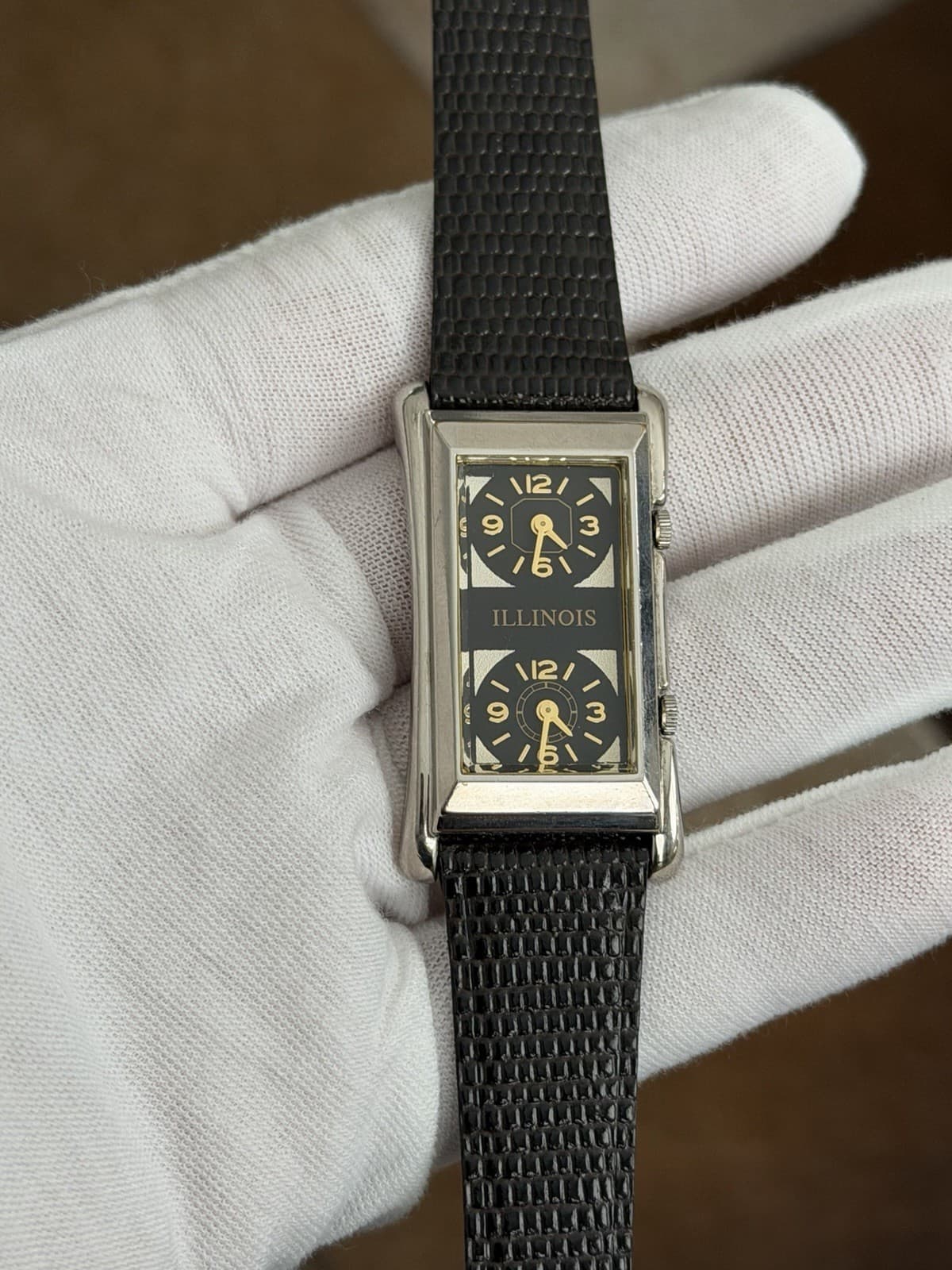
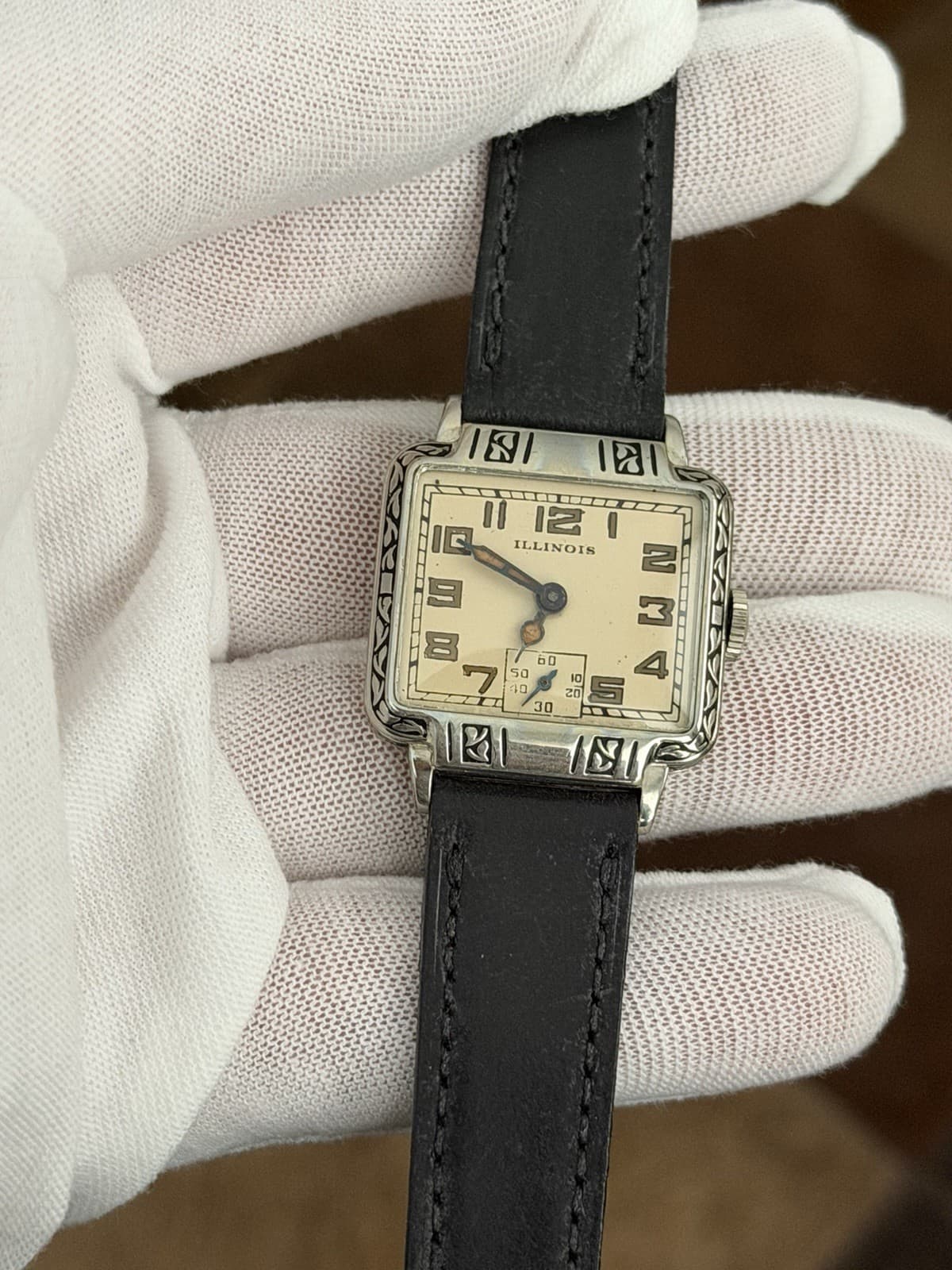
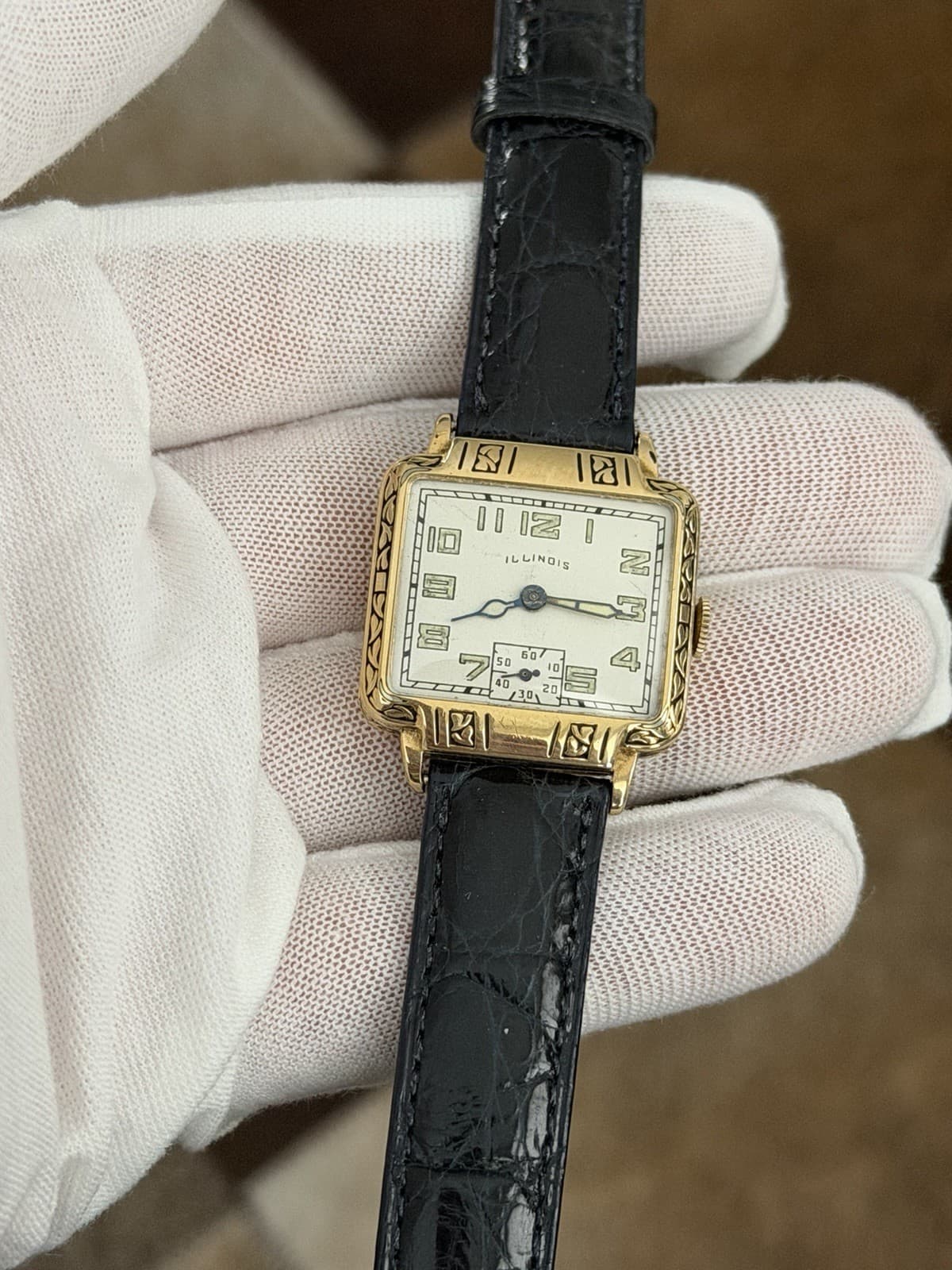
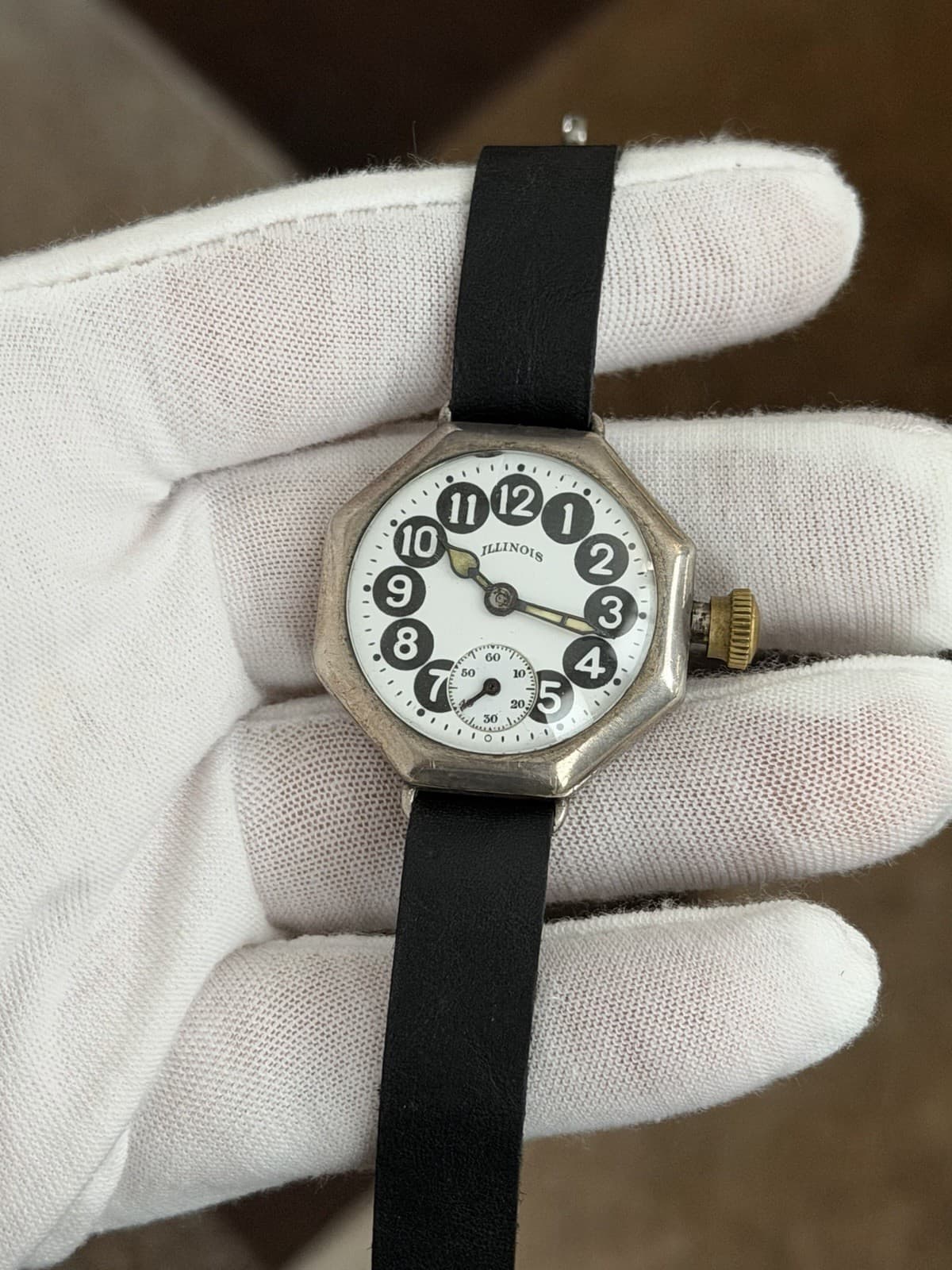
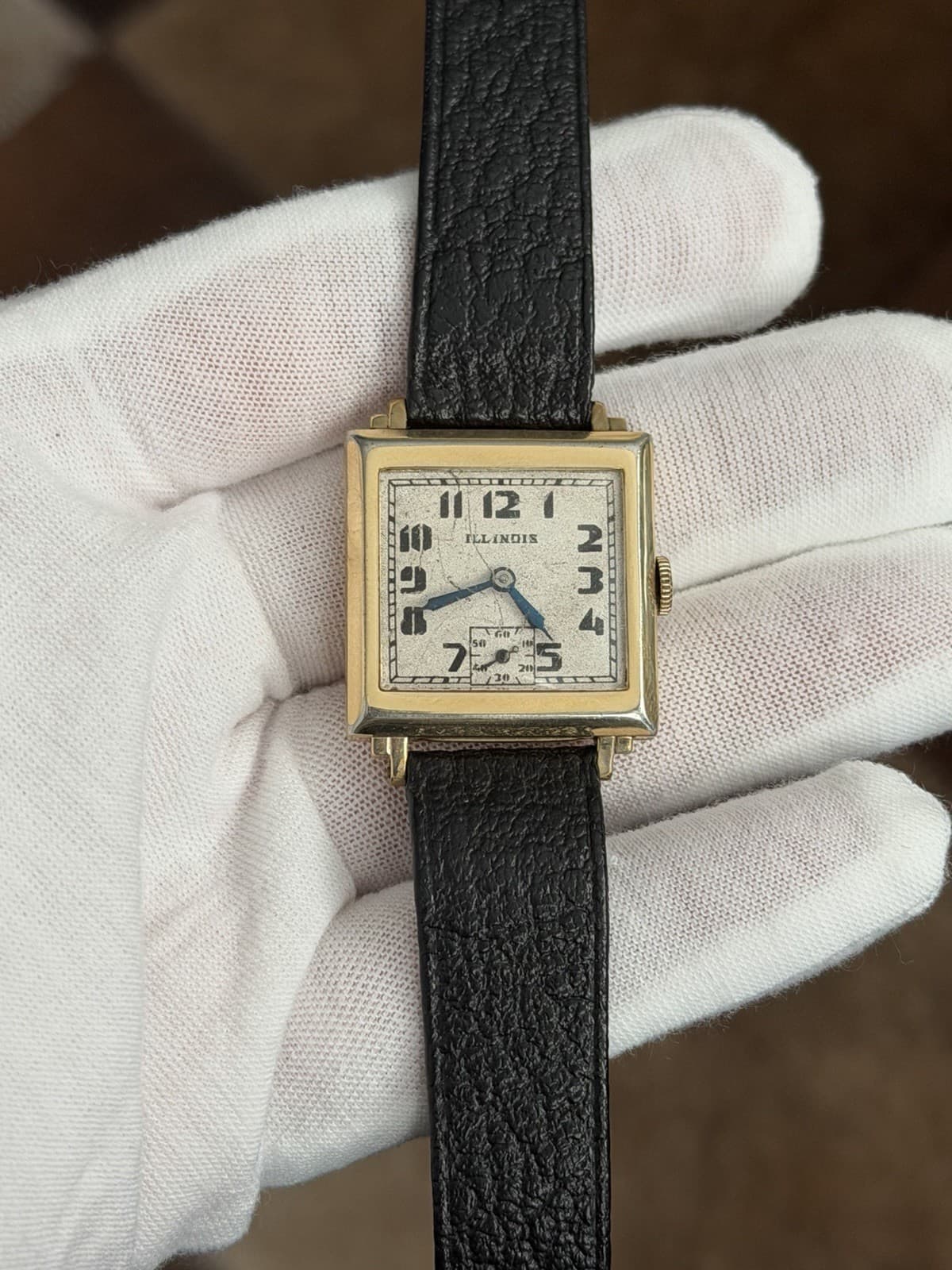
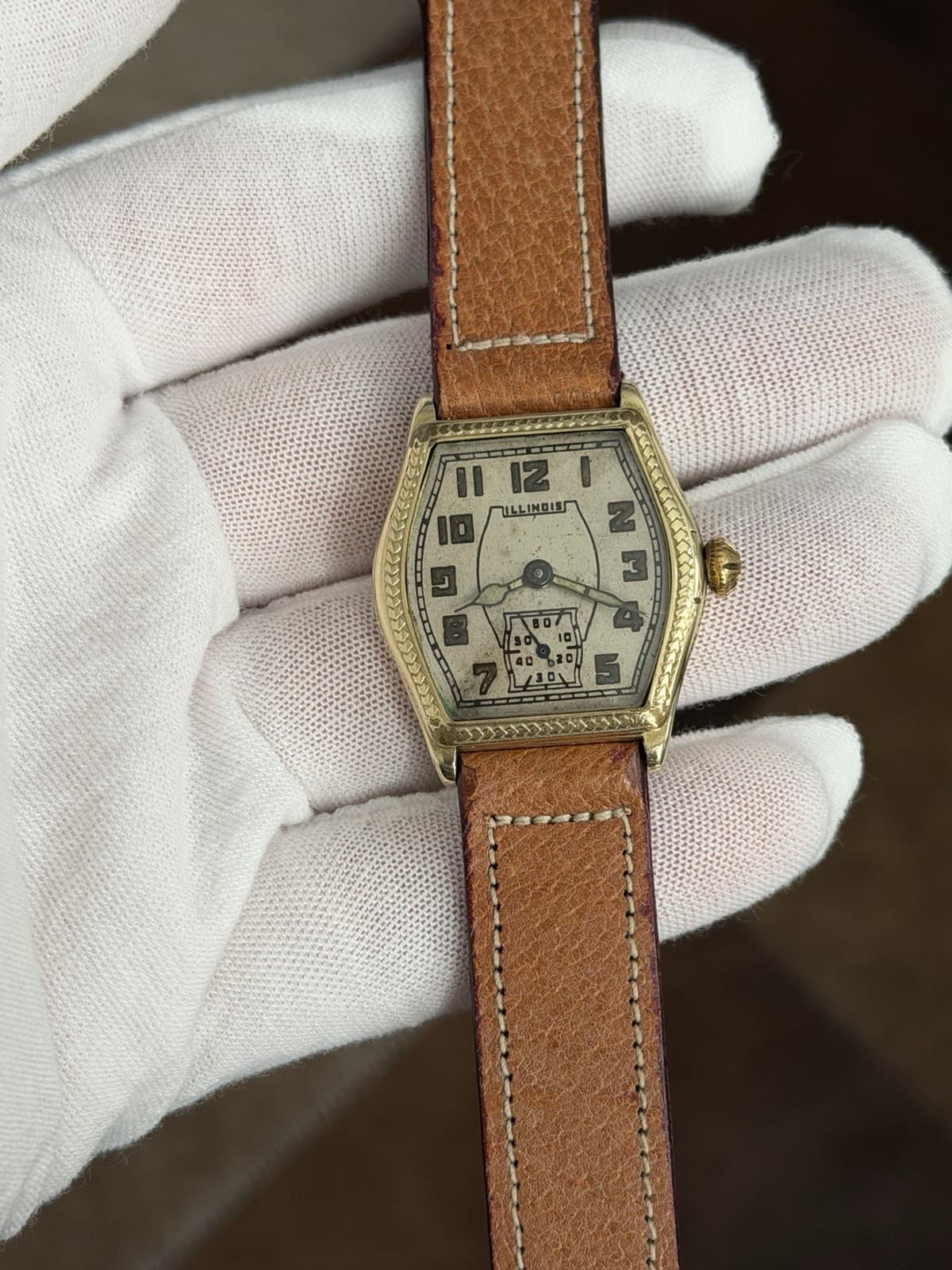
Compare Illinois watches by model
The Illinois Story
Illinois began in Springfield in 1869, when entrepreneur John C. Adams organized local investors to build a watch factory. The works opened the following year, and surviving production records begin in March 1872. The Panic of 1873 exposed the young company's weak finances and forced a series of reorganizations under the Springfield Watch Company and Illinois-Springfield Watch Company names. Jacob Bunn Sr. took control in 1878, stabilized the business, and by 1885 it had settled on the Illinois Watch Company name.
Under Bunn, Illinois developed from a precarious startup into one of America's major watch manufacturers. Skilled workers recruited from Elgin helped create a production system built around specialized machinery, interchangeable components, careful finishing, and repeated inspection. The Springfield works grew from about 125 employees and 25 watches a day in 1873 to roughly 1,300 employees and more than 800 watches a day by the early 1920s. Nearly six million watches ultimately passed through the factory.
The defining change came after Jacob Bunn Jr. succeeded his father in 1897 and deliberately moved Illinois away from inexpensive grades toward precision work. By 1914 the company had stopped making movements with fewer than 17 jewels, concentrating instead on watches adjusted for changes in temperature and position. That strategy made Illinois one of the leading names in railroad timekeeping, with lever-set lines such as the Bunn Special and Sangamo Special built to meet demanding railroad standards; later versions could run for 60 hours between windings. The factory maintained its own astronomical observatory, master clocks, and chronograph so its movements could be tested against an accurate time standard.
Illinois also played a significant role in America's transition from pocket watches to wristwatches. Its first wristwatches used small movements adapted to the new format, but by 1923 the company was selling a dedicated 6/0-size wristwatch movement and preparing a rectangular caliber. During the later 1920s it moved beyond supplying movements for separately purchased cases and developed complete watches with shaped cases, geometric bezels, two-tone metals, and other Art Deco details. This gave Illinois a distinct wristwatch identity rather than leaving it solely a railroad and pocket-watch company.
Jacob Bunn Jr. died in 1926, removing the leader who had directed the company's shift toward higher-grade watches. Hamilton agreed to acquire Illinois in 1927 and completed the purchase in early 1928 for more than $5 million. It kept the Springfield factory and Illinois name in operation, continued the railroad lines, and gave greater emphasis to the wristwatch program. Some of the company's most distinctive Art Deco watches therefore date from the Hamilton-owned years while still using designs and movements developed in Springfield.
The Great Depression brought that arrangement to an end. Hamilton closed the Springfield factory in 1932 and transferred remaining movements, parts, and tooling to Lancaster, Pennsylvania, where Illinois-branded watches continued to be completed until about 1939. The company's disappearance was therefore gradual: independence ended in 1928, manufacturing in Springfield ended in 1932, and production from its remaining material ended near the close of the decade. Illinois left two complementary legacies—high-grade watches central to American railroad service and unusually expressive wristwatches from the first great era of American wristwatch design.