◄ RETURN TO CATALOGCART
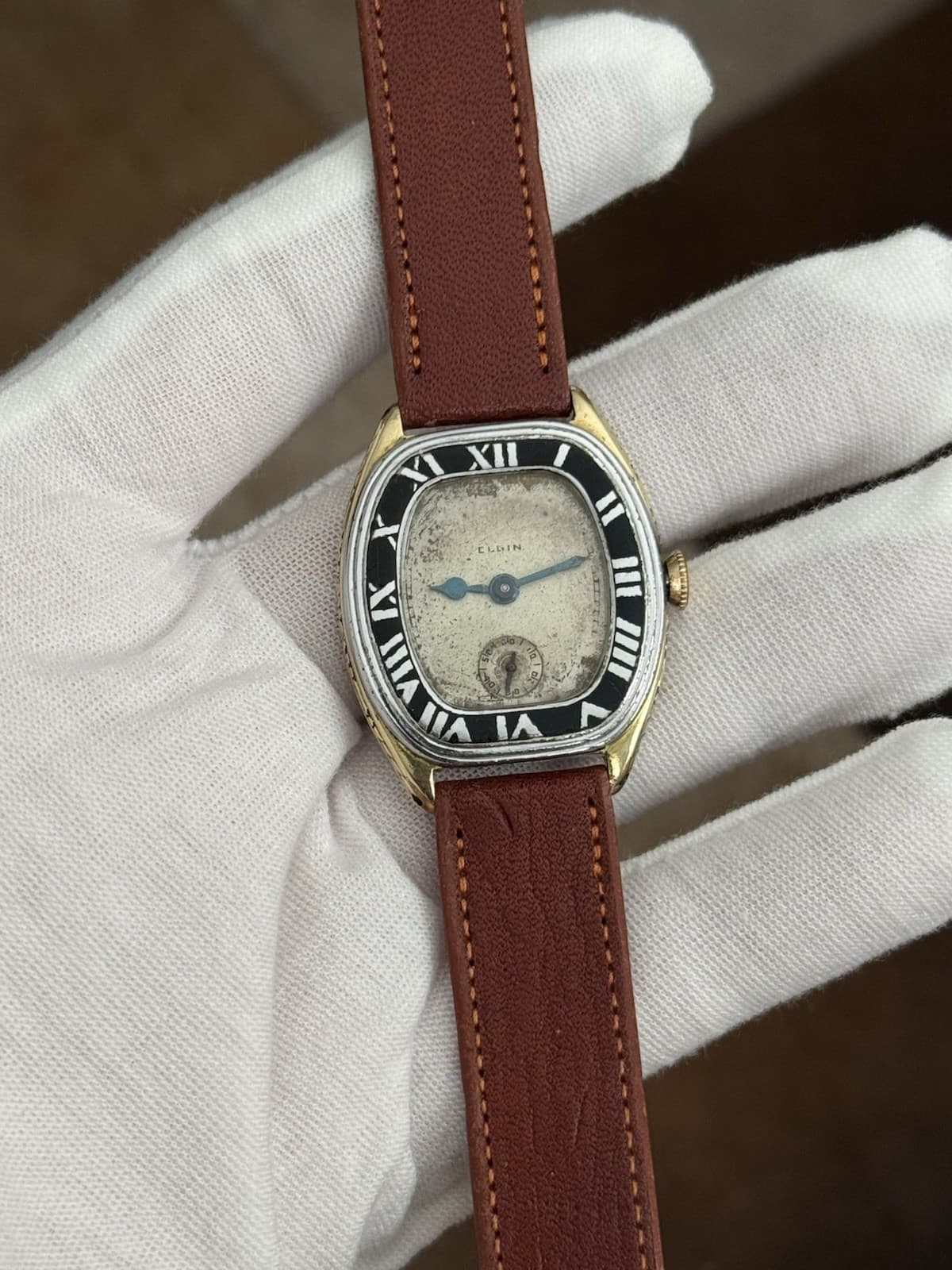
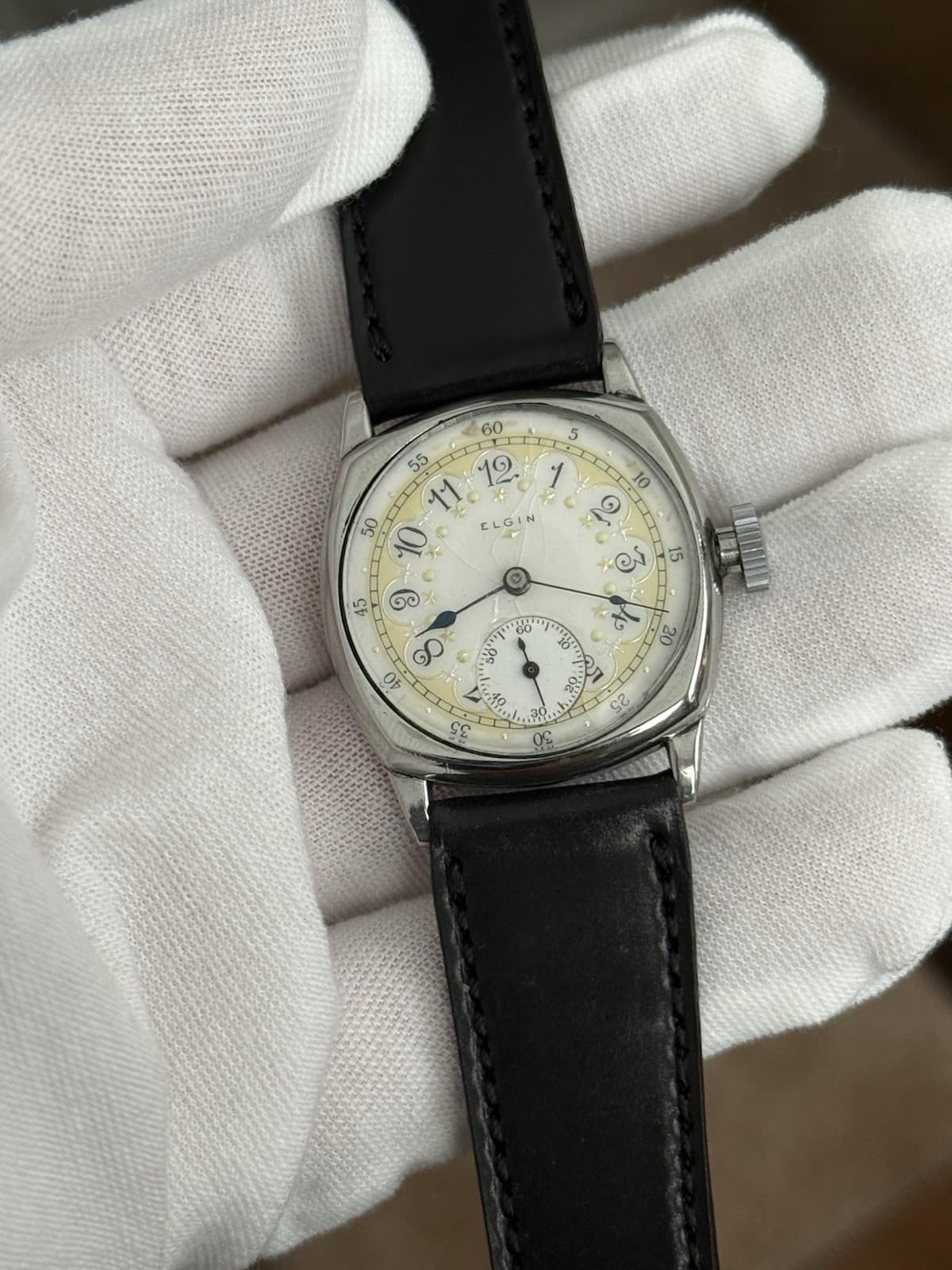
Vintage Elgin Legionnaire Art Deco 7J Manual Wind Enamel Men’s Watch - Image 1
1 / 8

Vintage Elgin Legionnaire Art Deco 7J Manual Wind Enamel Men’s Watch

DIRECT PRICE SAVE 10%
EBAY PRICE$625.00
DIRECT -10%$562.50

DESCRIPTION

Up for sale is a rare and highly collectible vintage Elgin Legionnaire men’s wristwatch, showcasing a bold Art Deco design with a striking enamel bezel. This model is highly desirable among collectors of early 20th-century American watches for its distinctive case style and period-correct detailing. The watch is powered by a 7-jewel Elgin manual wind movement (serial: 33443366), which is running smoothly and holding accurate time. The case, produced by the Elgin National Watch Case Company, features a gold-filled center with nickel back, decorative Art Deco engraving along the sides, and an enamel bezel framing the dial. The original dial with Roman numerals and small seconds at 6 o’clock shows signs of age, giving the watch unique vintage character. A brand new high-end brown leather strap has been fitted, offering both comfort and style. Key Details: • Brand: Elgin (USA) • Model: Legionnaire – Art Deco Era • Movement: 7J Manual Wind (running accurately) • Serial Number: 33443366 • Case: Gold-filled center with nickel back, decorative side engravings • Bezel: Enamel, original and intact • Case Size: 32.5mm (excluding crown) x 39mm lug-to-lug • Dial: Roman numeral design with sub-seconds at 6 o’clock • Strap: Brand new premium brown leather strap • Condition: Full working order; dial and case show aging that adds character (see photos) This is a very desirable Elgin model and an excellent opportunity for collectors of early American wristwatches, Art Deco pieces, or enamel bezel designs. Ships carefully. Feel free to message me with any questions.
BRAND:
Elgin
UNIT CONDITION:
Pre-owned - Good
► BUY ON EBAY
► BUY DIRECT & SAVE 10%
$625.00$562.50
► ARCHIVE FILE: VINTAGE WATCHMAKING — BRAND HISTORY

The decades between the 1940s and the 1970s were the high-water mark of mass watchmaking. Factories in Switzerland, Japan, the United States, Germany, and the Soviet Union turned out mechanical watches by the tens of millions, competing on accuracy, durability, and price rather than prestige. A watch was equipment, bought to be worn daily and serviced for decades, and the engineering reflects that: robust movements, serviceable architecture, and case designs driven by use, whether the wearer was a diver, a railway worker, or someone who simply needed to be on time.

That world ended quickly. Seiko's Astron, the first production quartz wristwatch, appeared on Christmas Day 1969, and within a decade quartz had collapsed the price of accuracy. The Swiss industry lost roughly two-thirds of its workforce between 1970 and the mid-1980s, storied American factories closed, and thousands of brands disappeared or consolidated. That upheaval, now called the quartz crisis, is the dividing line of modern horology, and it is why watches from either side of it carry such distinct character: mechanical pieces from before, and the inventive early quartz and digital watches from just after.

For collectors this era is uniquely rewarding. The watches were made in volume, so honest examples still surface at fair prices, yet the craft that went into them is no longer economical to reproduce at those price points. Most mechanical movements of the period can be serviced indefinitely by a competent watchmaker, and early LCD and LED watches are artifacts of the first consumer electronics boom. The things to look for never change: original dials and hands, unpolished cases, and movements that have been maintained rather than merely survived.
► RELATED TIMEPIECES DETECTED (4)

RECOMMENDATIONS BASED ON BRAND AND MOVEMENT ANALYSIS